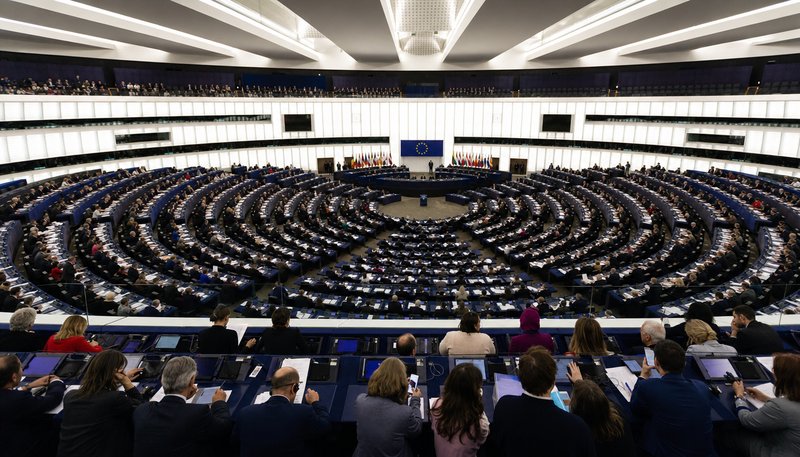
What Is the European Parliament?
The European Parliament (EP) is the legislative branch of the European Union. Established by the Treaty of Rome in 1957 and directly elected since 1979, it has grown from a consultative assembly of 78 members to a co-legislative body of 720 MEPs representing 27 member states. It sits in both Strasbourg (plenary sessions) and Brussels (committee work), with the secretariat in Luxembourg.
Unlike most national parliaments, the European Parliament does not form a government. The executive function belongs to the European Commission, which must be approved by Parliament. The Council of the EU — made up of national ministers — acts as an upper chamber. Together, Parliament and Council share equal legislative power in most policy areas under the ordinary legislative procedure.
How EU Elections Work
European Parliament elections take place every five years, simultaneously across all EU member states. Each country uses a form of proportional representation, though the exact system varies: most use party lists, while some (such as Ireland and Malta) use the Single Transferable Vote. Seats are allocated to each country roughly in proportion to population, with smaller states receiving a minimum floor of MEPs to ensure representation.
The 2024 elections — the tenth direct elections to the EP — produced 720 seats across 27 member states, up from 705. Voter turnout has risen from a historic low of 42.6% in 2014 to 51% in 2024, reversing a decades-long decline. EU citizens can vote and stand as candidates in their country of residence, not just their country of origin — a unique feature of European citizenship.
European Parliament Political Groups
MEPs do not sit in national delegations but in transnational political groups organised by ideological affinity. To form a group, MEPs need at least 23 members from at least one-quarter of member states. As of 2024, seven political groups sit in Parliament:
- EPP — European People's Party (Christian Democrat / Centre-right): the largest group, with around 188 seats in the 2024–2029 term.
- S&D — Progressive Alliance of Socialists and Democrats (Social Democrat / Centre-left): historically the second group, with around 136 seats.
- Patriots for Europe (National conservative / Right): formed in 2024, now the third-largest group with around 84 seats.
- ECR — European Conservatives and Reformists (Conservative / Eurosceptic): around 78 seats.
- Renew Europe (Liberal / Pro-European): the successor to ALDE, with around 77 seats.
- Greens–EFA (Green / Regionalist): around 53 seats after significant losses in 2024.
- The Left — GUE/NGL (Socialist / Communist): the smallest group, with around 46 seats.
MEPs not affiliated with any group sit as Non-Attached Members (NI). The political balance between groups determines which committees MEPs chair, which legislation advances, and who is nominated for key institutional roles.
MEP Candidates and Elections
MEP candidates are typically nominated by national political parties, which are affiliated with the transnational European parties. In most member states, voters choose between party lists rather than individual candidates, though some countries allow preferential voting. The allocation of seats between groups after elections is among the most closely watched aspects of European politics.
The Spitzenkandidat process — introduced ahead of the 2014 elections — allows each European party to nominate a lead candidate for President of the European Commission, linking the election result to the executive appointment. Though not always followed by the European Council, it represents an ongoing effort to make EU elections feel more consequential to voters.
What the European Parliament Does
Parliament's core functions are legislative, budgetary and supervisory. On legislation, it works alongside the Council to approve, amend or reject Commission proposals across most policy areas — from environmental regulation to digital markets, financial services and consumer protection. On the budget, Parliament and Council jointly determine EU spending. On supervision, Parliament holds confirmation hearings for Commissioners, can censure the Commission, and scrutinises the work of EU agencies.
The Parliament also plays a role in treaty ratification, enlargement decisions and international agreements. Its committees — 22 standing committees covering areas from agriculture to civil liberties — do much of the substantive legislative work before plenary votes in Strasbourg.
EU Election Results: Historical Trends
European Parliament election results reveal long-term shifts in European politics. The 2014 elections saw record gains for Eurosceptic and nationalist parties, with the far-right National Front topping the French vote and UKIP winning in the United Kingdom. The 2019 elections brought significant Green gains alongside continued nationalist strength. The 2024 elections produced the largest-ever group of right-wing MEPs, while the centrist EPP–S&D–Renew coalition retained a working majority.
Understanding these trends requires tracking not just seat counts but vote shares across member states, preferential voting patterns and the evolution of European party families over time. The pollwatch series and early prediction analyses on this site examine the mechanics of EU election forecasting in detail.
The European Parliament and EU Democracy
The democratic legitimacy of the European Union rests significantly on the Parliament. Critics point to a persistent "democratic deficit" — the gap between EU decision-making and citizen participation — but direct elections, expanded legislative powers under successive treaties, and rising turnout all point toward a strengthening of the Parliament's democratic role. The institution remains central to any assessment of how European democracy functions and evolves.
Frequently Asked Questions
How many MEPs are there in the European Parliament?
The European Parliament has 720 MEPs since the 2024 elections, up from 705 in the previous term. The number of MEPs per member state ranges from 6 (smallest countries) to 96 (Germany).
How often are European Parliament elections held?
EU elections take place every five years. The most recent elections were held in June 2024. The next elections are scheduled for 2029.
Which party has the most seats in the European Parliament?
The European People's Party (EPP), a centre-right Christian Democrat group, is the largest group in the European Parliament with approximately 188 seats in the 2024–2029 term.
What is the difference between the European Parliament and the European Council?
The European Parliament is the directly elected assembly of MEPs. The European Council is a separate institution made up of the heads of state or government of EU member states, which sets the EU's overall political direction. The Council of the EU (also called the Council of Ministers) represents national ministers and acts as a co-legislator alongside Parliament.
What does the European Parliament actually do?
The European Parliament has three main functions: it co-legislates with the Council of the EU to pass EU laws; it approves and scrutinises the EU budget; and it exercises democratic oversight over other EU institutions, including holding confirmation hearings for the European Commission and holding the power to censure the Commission.
Who can vote in European Parliament elections?
All EU citizens aged 18 and over can vote in European Parliament elections. Uniquely, EU citizens living in another member state can vote there (or in their home country). Voting age varies slightly — some countries allow 16-year-olds to vote in EU elections.
What is the Spitzenkandidat process?
The Spitzenkandidat ("lead candidate") process links EU election results to the nomination of the European Commission President. Each major European party nominates a lead candidate before elections; the party winning the most seats proposes their candidate to the European Council. The process was introduced in 2014 and has been applied inconsistently — the European Council retains discretion over the final nomination.
Where does the European Parliament meet?
The European Parliament holds its monthly plenary sessions in Strasbourg, France, and holds additional mini-plenaries and committee meetings in Brussels, Belgium. The Parliament's administrative secretariat is based in Luxembourg.