The European Parliament: Elections, Parties & MEPs Explained
How EU elections work, which political groups hold power, and what MEPs actually do — a complete guide to European democracy's central institution.
Independent Analysis
Tracking European Parliament elections, MEP candidates, political groups and EU democratic institutions — from the 2014 cycle to the present.
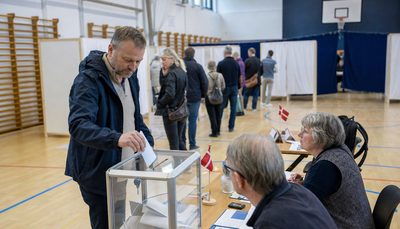
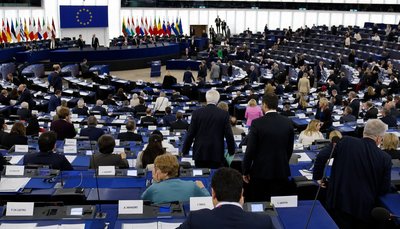
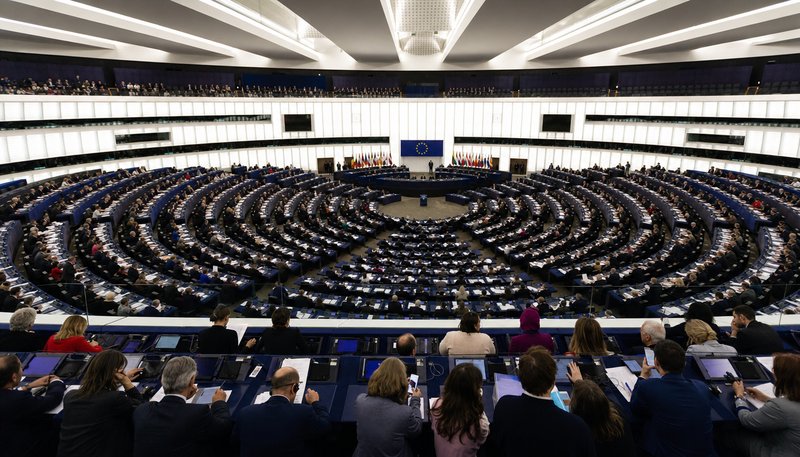
European Parliament elections are the world's largest transnational democratic exercise. Every five years, more than 400 million eligible voters across 27 EU member states cast ballots to elect 720 Members of the European Parliament who represent them in Brussels and Strasbourg. The result is not one election but 27 simultaneous national contests, each shaped by domestic political dynamics, yet collectively determining the balance of power in the EU's only directly elected institution.
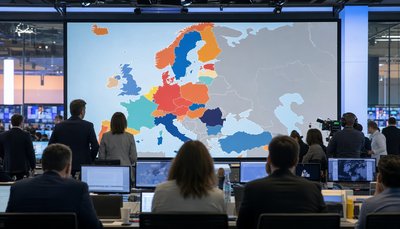
Understanding EU election results requires more than tracking the headline seat count. It requires knowing how national party performances map to European political group totals, how the post-election reshuffle allocates committee chairs and institutional roles, and how the coalition arithmetic between the EPP, S&D and Renew Europe shapes EU legislation for the five-year term ahead. The EPP's structural advantage, the S&D's reliance on higher-turnout electorates, and the growing weight of nationalist and eurosceptic groups are all factors no single national polling narrative captures.
The coverage here focuses on the mechanics: EU election polling methodology, seat projection models, group formation dynamics, and what pre-election forecasts do and do not capture. The analysis traces how European Parliament elections have evolved — from the record Eurosceptic gains of 2014, through the Green surge of 2019, to the 2024 cycle, which produced the largest-ever contingent of right-wing MEPs while the centrist coalition retained its working majority.
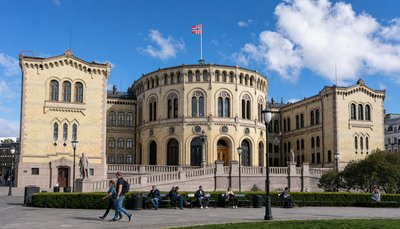
The site also examines elections beyond the EU's formal borders that bear directly on European politics. Norway — an EEA member that implements EU single market legislation without a vote in EU institutions — offers a consistent reference point for how deep European integration shapes domestic politics in countries that have chosen a relationship with the EU short of full membership. Norwegian electoral dynamics, from threshold mechanics to bloc-switching patterns, provide useful parallels for EU-level forecasting methodology.
Featured Analysis
How EU elections work, which political groups hold power, and what MEPs actually do — a complete guide to European democracy's central institution.
Seats, parties, political groups and the full election results breakdown.
The next European Parliament election is scheduled for June 2029. EU elections take place every five years. The most recent elections were held in June 2024, producing the largest-ever contingent of right-wing MEPs while the centrist EPP–S&D–Renew coalition retained its working majority.
All 27 EU member states hold elections simultaneously every five years. Eligible voters across the EU elect a combined total of 720 MEPs. Each member state is allocated a number of seats broadly proportional to its population, ranging from 6 seats for the smallest states to 96 for Germany.
The European Parliament is the directly elected legislative assembly, representing EU citizens. The European Commission is the EU's executive body, responsible for proposing legislation and implementing EU policies. The Parliament must approve and can censure the Commission, giving MEPs significant oversight over the EU's executive arm.
MEPs are elected by proportional representation within each member state. Each country uses its own variant of PR — closed or open party lists, single transferable vote in Ireland and Malta, or regional list systems. All EU citizens aged 18 or over may vote, and EU citizens living in another member state can choose to vote there instead of their home country.
European political groups are transnational alliances of national political parties that sit and vote together in the European Parliament. To form a group, at least 23 MEPs from at least 7 member states must affiliate. The largest groups — EPP (centre-right), S&D (centre-left), and Renew Europe (liberal) — have historically dominated the Parliament's legislative agenda.