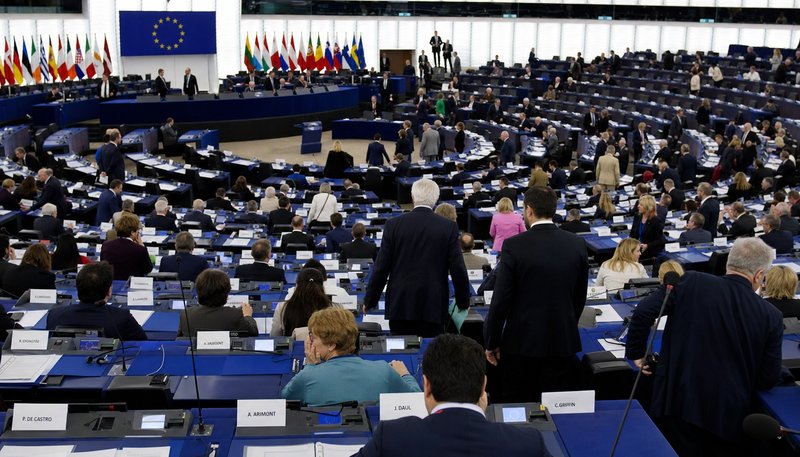
The Constitutive Session
Within one month of the European Parliament elections, the newly elected MEPs gather for their constitutive session. This is the moment when the new Parliament formally takes shape: MEPs declare which political group they are joining, elect the President of the European Parliament, and distribute committee chairs and vice-presidencies among the groups.
The distribution of posts follows the D'Hondt method, which allocates committee seats and chairs in proportion to each group's size. Larger groups — historically the EPP and S&D — command the most influential committee chairmanships, though smaller groups can secure important posts in areas where they have particular strength or where coalition dynamics favour concessions.
How Political Groups Form and Shift
Not every MEP elected under a national party banner automatically joins the expected European group. In the weeks before and after the constitutive session, negotiations take place between MEPs and group leaders. Defections are common: MEPs from parties that have fallen out with their European family, or that are positioning for a new alliance, may switch groups or declare themselves Non-Attached.
The formation of new groups — as happened with the Patriots for Europe in 2024 — reshuffles the entire allocation of posts. A new group of sufficient size is entitled to its share of committee seats, resources and speaking time, forcing adjustments across every other group's allocation. Tracking who holds which committee chairmanship is therefore a continuous exercise, not a one-time snapshot.
Committee Seats and the D'Hondt Method
The European Parliament has 22 standing committees, each responsible for a specific policy area — from the Environment Committee (ENVI) and the Economic and Monetary Affairs Committee (ECON) to the Foreign Affairs Committee (AFET) and the Civil Liberties Committee (LIBE). Each committee has between 20 and 88 members, with seats allocated to political groups using the D'Hondt proportional method.
The chair of a committee is one of the most influential positions an MEP can hold, giving them control over the legislative agenda in their area. Chairing ECON or ENVI — which handle some of the most politically contested legislation — is among the most sought-after assignments. Groups trade committee chairs as part of the broader post-election coalition agreements that determine Parliament's direction for the five-year term.
Who Goes Where: Key Appointments to Watch
Beyond committee assignments, the post-election period involves decisions about the President of the European Parliament (elected by MEPs for a two-and-a-half-year term, renewable once), 14 Vice-Presidents, five Quaestors (responsible for administrative matters), and dozens of delegation chairs. Each of these posts becomes a negotiating chip between political groups.
The Presidency of the Parliament is typically rotated between the two largest groups at the midpoint of the five-year term, reflecting the EP's tradition of broad coalition governance. Whether that tradition holds — or whether a realigned majority forces a departure from convention — is one of the defining political questions after each election cycle.
The Role of National Delegations
Within each political group, national party delegations have their own internal hierarchies and interest in securing positions for their MEPs. A large national delegation — such as the German CDU/CSU within the EPP, or the French Socialists within the S&D — carries considerable weight in group decisions about who gets nominated for which post. Smaller delegations must form coalitions within the group to advance their candidates.
This interaction between the transnational group level and national party interests is one of the distinctive features of the European Parliament's political dynamics. Understanding it requires tracking not just election results but the internal politics of each group across all member states.
Frequently Asked Questions
How are European Parliament seats allocated between countries?
Seats are allocated using "degressive proportionality" — larger countries get more seats, but the ratio of seats to population is higher for smaller countries. Germany has 96 MEPs; Malta, Luxembourg and Cyprus each have 6. The total (720 seats since 2024) is fixed before each election by a European Parliament resolution.
What is the D'Hondt method used in the European Parliament?
The D'Hondt method is a highest-averages method of proportional representation. In the context of the European Parliament, it is used to allocate committee seats among political groups in proportion to their size, and is also used by most member states to convert votes into seats in their national EP elections.
Can MEPs change political group after being elected?
Yes. MEPs are free to change political group at any point during their mandate. Group switches are most common in the weeks following an election, when new groups form or existing groups reorganise, but they can also occur mid-term if an MEP or their national party changes political direction.
How is the President of the European Parliament elected?
The President of the European Parliament is elected by MEPs in a secret ballot. A candidate needs an absolute majority in the first three rounds; if no candidate achieves this, the two leading candidates in the third round proceed to a fourth round decided by simple majority. The President serves a two-and-a-half-year term, renewable once within a five-year parliamentary term.
What happened to the EP seat allocation after the 2024 elections?
The 2024 elections produced significant shifts: the EPP remained the largest group, the Greens lost around 19 seats, and the new Patriots for Europe group — formed in summer 2024 — became the third-largest group, displacing ECR. The EPP, S&D and Renew Europe retained a working majority, shaping committee allocations for the 2024–2029 term.
How long does the post-election reshuffle take?
The constitutive session takes place within one month of election day. However, the full reshuffle — including committee chair negotiations, Vice-Presidency elections and the finalisation of group membership — typically takes several weeks and can continue into the first months of the new term as negotiations conclude.