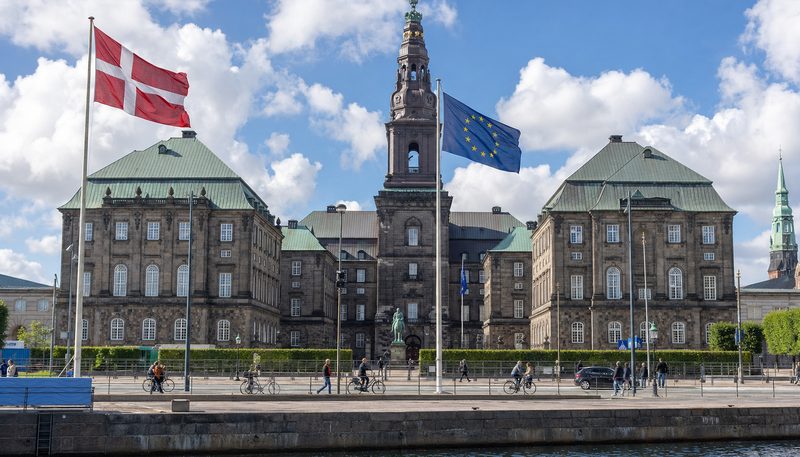
Denmark became the test case for how far a member state could go with the room those votes left it, and for how EU competition law would treat the result.
The European Parliament Decides Not to Decide
In February 2009 Parliament's Committee on the Internal Market and Consumer Protection (IMCO) adopted an own-initiative report on the integrity of online gambling. Its rapporteur was Christel Schaldemose, a Danish Social Democrat MEP, and the committee backed her text by 32 votes to 10. In the plenary vote in Strasbourg on 10 March 2009, the resolution passed with 544 votes in favour, 36 against and 66 abstentions.
The Schaldemose report argued that gambling should not be governed by a single EU regime. Member states, it said, had the right to regulate their own markets according to their traditions and cultures, to protect consumers against addiction, fraud, money laundering and match fixing. Eleven MEPs published a minority opinion, a sign of how divided the groups were, but the majority line held: the internal market would not be extended to online casinos and betting by legislation.
Parliament returned to the subject in September 2013 with a second own-initiative report from the same committee, drafted by the German liberal MEP Jürgen Creutzmann. It called for closer cooperation between national regulators but again stopped short of asking for EU legislation. For national governments, the two votes settled the question of who was in charge. Denmark used that room to build a licensing system run by the Danish Gambling Authority (Spillemyndigheden), and Brussels was soon asked to look at how it would be taxed.
Brussels Steps In on Tax
Leaving gambling to the member states did not mean leaving it outside EU law altogether. Competition rules still applied, and Denmark's plan raised an obvious question. When the Danish Tax Ministry notified its reform to the European Commission in July 2010, it proposed taxing licensed online operators at 20 per cent of gross gaming revenue, while land-based casinos were taxed at rates as high as 70 per cent.
The Commission treated the lower online rate as state aid, because it gave one group of companies an advantage that another group did not get. On 20 September 2011 it nevertheless approved the measure in a formal state aid decision (case C 35/2010), concluding that the benefits of opening the Danish market outweighed the distortion of competition. The reasoning was simple: an online tax set too high would push Danish players back towards unlicensed offshore sites, which was exactly the problem the reform was meant to fix.
Danish land-based operators did not accept the outcome. Dansk Automat Brancheforening and Royal Scandinavian Casino Århus took the decision to the EU General Court. On 26 September 2014 the court dismissed both actions on procedural grounds, finding that the applicants had not shown they were directly and individually concerned by the measure. The court never ruled on the substance, so the Commission's approval stood.
Licensing Instead of a Monopoly
With the tax question resolved, the Danish market opened to licensed online casinos and betting operators on 1 January 2012. Danske Spil kept its exclusive position in lotteries, but casino games and sports betting were opened to private companies that could meet the licensing conditions. More than a decade on, those companies make up the regulated market that overviews of the best online casinos in Denmark now compare: every brand on them holds a Spillemyndigheden licence and pays tax on its gross gaming revenue at the 28 per cent rate in force today.
The contrast with Norway is instructive. As an EEA member, Norway implements most single market legislation, but it chose the opposite path and kept online gambling inside the state monopoly run by Norsk Tipping. The Nordic neighbours started from similar welfare traditions and very different conclusions, and both models remain politically popular at home.
That rate is not the one Brussels examined. On 1 January 2021 the online tax rose from 20 to 28 per cent, with the government linking the extra revenue to problem gambling support and stronger supervision. The rate still sits below the land-based level, so the logic the Commission accepted in 2011 survives, but the gap has narrowed.
What the Danish Case Says About EU Politics
The Danish story shows how much of EU policy is made without new legislation. The Parliament set the political direction through a non-binding resolution, the Commission applied state aid rules case by case, and the General Court closed the dispute on admissibility. No directive was ever needed.
The Commission followed the same light-touch approach afterwards. Its 2012 action plan on online gambling and its 2014 recommendation on consumer protection were guidance rather than law, and in December 2017 it closed its infringement proceedings against member states in the sector, leaving national courts to handle complaints. The question of EU competence, which committees can claim a file and how the groups line up behind a rapporteur, is covered in more detail in our guide to how the European Parliament works.
For MEPs, gambling remains a recurring but low-priority file. It returns whenever match fixing, cross-border advertising or player protection hits the headlines, and each time the answer has been national rules with some cooperation between regulators, not a common EU law.
Frequently Asked Questions
Is there an EU law on online gambling?
No. Online gambling is regulated by each member state. EU treaty rules on services, competition and state aid still apply, but there is no directive or regulation that sets common gambling rules across the Union.
How did the European Parliament vote on online gambling?
On 10 March 2009 MEPs adopted the Schaldemose resolution by 544 votes to 36, backing the right of member states to regulate gambling. A second IMCO report, drafted by Jürgen Creutzmann, was adopted in September 2013 and again did not call for EU legislation.
Why did the European Commission examine Denmark's gambling tax?
Because the lower tax rate for online operators counted as state aid under EU competition rules. The Commission approved it in September 2011 on the grounds that opening the market brought more benefit than harm.
When did Denmark open its online gambling market?
On 1 January 2012, when licensed private operators were allowed to offer online casino games and sports betting under the supervision of the Danish Gambling Authority.