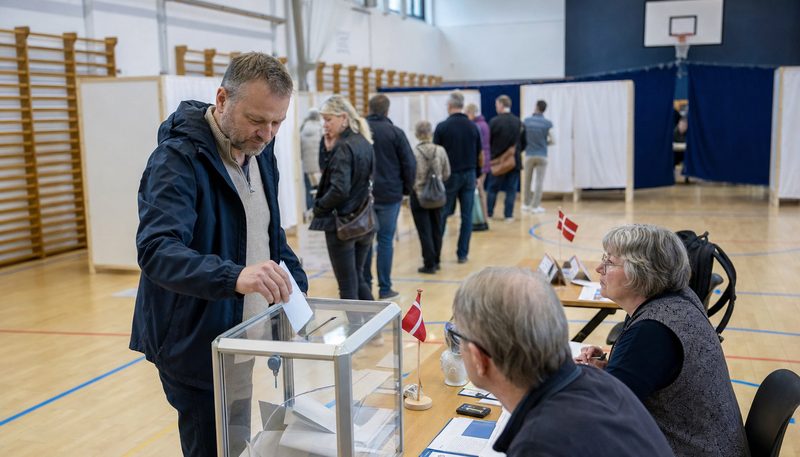
That reputation makes the 2024 European Parliament election in Denmark worth a closer look. The result did not reward the eurosceptic right. It rewarded a pro-European party of the green left.
How Denmark Elects Its MEPs
Denmark elected 15 MEPs in 2024. The whole country forms a single constituency, and seats are allocated proportionally using the D'Hondt method, the same formula many member states use and one that slightly favours larger lists. Readers who want the mechanics of seat projections can find them in our explainer on what the first EU election polls revealed.
One Danish feature changes the arithmetic. Parties can form electoral alliances, which pool their votes for the first stage of seat allocation before the seats are shared out within the alliance. A small party that would not reach a full quota on its own can win a seat this way, and alliance-building is an important part of every Danish EU campaign.
Voters can also choose between backing a party list as a whole and casting a personal vote for a named candidate. Personal votes decide which candidates on a list actually take the seats, so well-known figures can climb past colleagues placed above them by their party. Danish campaigns are therefore more candidate-centred than the list systems of many larger member states.
The size of the Danish delegation has grown slowly. Denmark elected 13 MEPs in 2019 and gained a 14th seat in 2020, when the seats freed up by the United Kingdom's departure were redistributed. The reallocation before the 2024 election added a 15th, reflecting population changes across the Union.
Danish voters went to the polls on Sunday 9 June 2024, the last day of the four-day EU-wide voting window. Turnout was 58.2 per cent, well above the EU average and a reminder that Danish voters take European elections more seriously than their reputation suggests.
The 2024 Result
The Socialist People's Party (SF) finished first with 17.4 per cent of the vote and three seats. It was the first time SF had topped a nationwide election in Denmark, and it came after a campaign that put climate policy and European cooperation at the centre.
The Social Democrats of Prime Minister Mette Frederiksen came second with 15.6 per cent, also winning three seats. For a governing party that had dominated Danish politics for several years, losing first place to a smaller partner on the left was a setback, even if the seat count was the same. Venstre, the liberal party that sits in the government coalition, took 14.7 per cent and two seats.
The remaining seven seats were spread across seven parties, each winning one: the Conservatives, the Danish People's Party, the Denmark Democrats, Liberal Alliance, the Moderates, the Red-Green Alliance and the Danish Social Liberals. That fragmentation is typical of Danish politics, where a dozen parties regularly compete and coalitions are the norm.
Where Danish MEPs Sit in Brussels
Once elected, Danish MEPs join the European political groups. SF sits with the Greens/European Free Alliance, the Social Democrats with the Socialists and Democrats, and Venstre with Renew Europe. The smaller parties spread across almost the whole range of groups, from the Left to the national conservative right.
The effect is that Denmark's 15 seats are divided among more groups than its size would suggest. No single Danish delegation is large enough to dominate a group, so Danish influence in Parliament depends on individual MEPs winning committee posts and rapporteurships. How those posts are allocated is explained in our guide to how the European Parliament works.
What the Result Says About Danish Attitudes to the EU
The 2024 vote fits a longer shift in Danish opinion. In June 2022 Danes voted in a referendum to abolish the country's opt-out from EU defence cooperation, a decision taken after Russia's full-scale invasion of Ukraine. The euro opt-out remains, and few expect it to be put to a vote soon, but the debate over Denmark's place in Europe has moved from whether to belong to how much to take part.
The Danish People's Party, once the strongest voice of Danish euroscepticism, illustrates the change. It topped the European election in 2014 but has since lost most of its support, and in 2024 it held on to a single seat. The newer Denmark Democrats took part of its old electorate, but the combined eurosceptic vote stayed well below the level of a decade earlier.
None of this makes Denmark an enthusiastic federalist. Danish governments still guard national competences closely, from welfare to taxation, and Danish MEPs across the spectrum tend to resist moves that would shift decisions from Copenhagen to Brussels. The 2024 result suggests a country that has settled into membership on its own terms.
Frequently Asked Questions
How many MEPs does Denmark have?
Denmark elected 15 Members of the European Parliament in the 2024 election.
Which party won the 2024 European election in Denmark?
The Socialist People's Party (SF) came first with 17.4 per cent of the vote and three seats, ahead of the Social Democrats and Venstre.
What was the turnout in Denmark in 2024?
Turnout was 58.2 per cent, one of the higher figures in the EU.
Does Denmark still have EU opt-outs?
Yes. Denmark abolished its defence opt-out in a 2022 referendum, but it keeps its opt-out from the euro and its arrangements on justice and home affairs.